
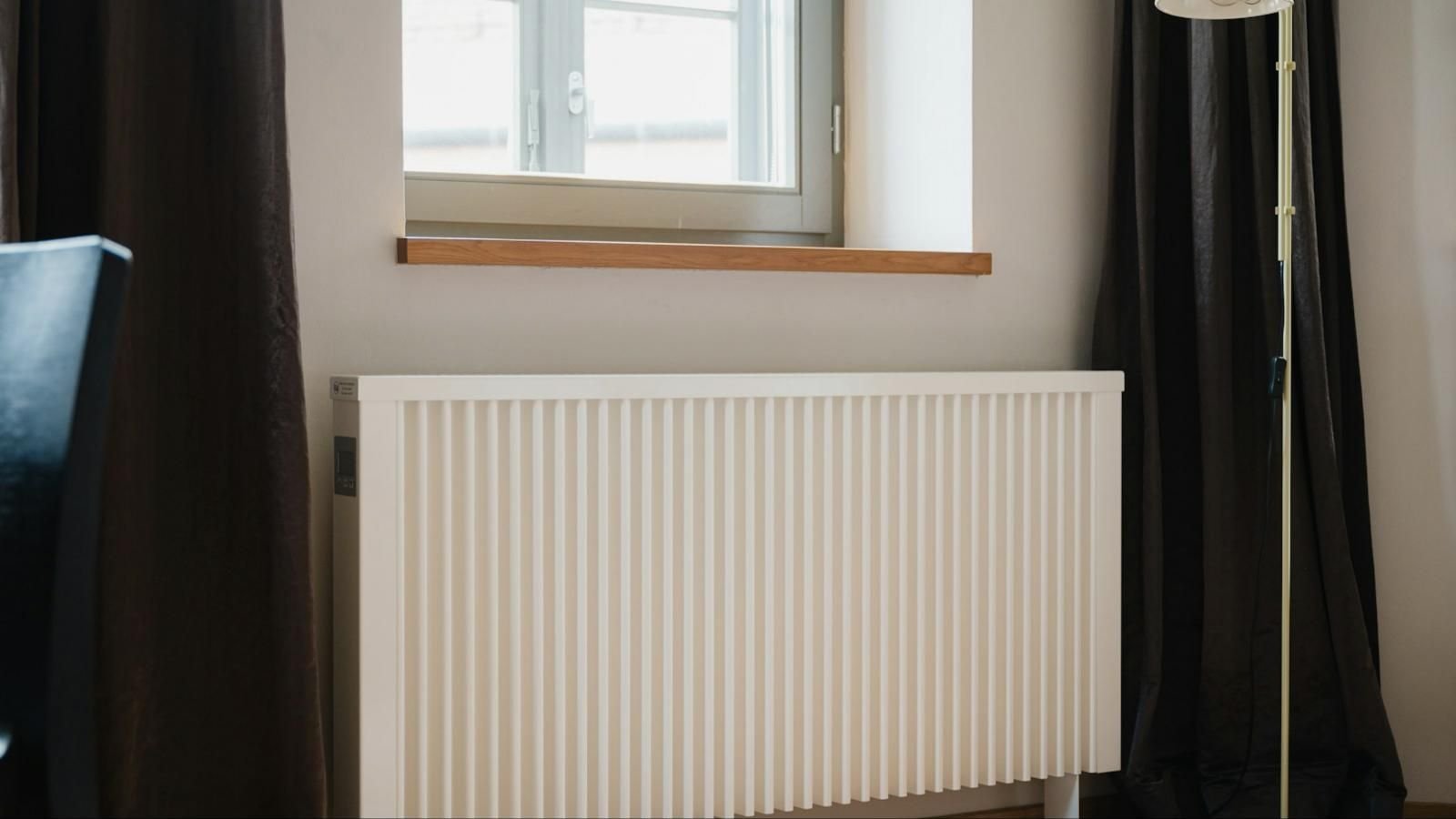
When the heating comes on and a radiator stays cold, the part that's cold usually tells you what's wrong. Run your hand carefully over the radiator once it has been on for twenty minutes or so, then match what you find to the sections below.
Cold at the top, warm at the bottom
This is almost always trapped air. Air rises to the top of the radiator and stops hot water filling it. The fix is to bleed the radiator:
- Turn the heating off and let the radiators cool, so you aren't handling scalding water.
- Find the bleed valve at one of the top corners. You'll need a radiator key, which costs a few pounds from any DIY shop.
- Hold a cloth under the valve and turn the key about a quarter turn anticlockwise. You'll hear air hissing out.
- As soon as water starts to come out, close the valve again.
Afterwards, check the pressure gauge on your boiler. Bleeding lets a little water out of the system, and if the pressure drops too low the boiler may stop working. Your boiler manual will tell you the right pressure and how to top it up.
If one radiator keeps filling with air every few weeks, something is letting air into the system. That's worth getting looked at.
Cold at the bottom, warm at the top
This usually points to sludge: a black, muddy build-up of rust and debris that settles in the bottom of radiators over the years. It blocks the flow of hot water and makes the whole system work harder.
A single radiator can be taken off the wall and flushed through. If several radiators are cold at the bottom, the whole system may need cleaning. Adding a magnetic filter and inhibitor afterwards helps stop it coming back.
Cold all over
If one radiator stays completely cold while the others heat up, check the simple things first:
- Are both valves open? One is the control valve you turn, the other is usually under a plastic cap.
- Is the thermostatic valve (TRV) turned up? The pin underneath can stick, especially after a summer of not being used. Take the head off and the pin should spring in and out.
If those are fine, the radiator may be blocked or the system may need balancing.
Some rooms warm, others never get there
When radiators close to the boiler get hot quickly and the ones furthest away stay lukewarm, the system usually needs balancing. That means adjusting the valve on each radiator so hot water is shared out evenly. It takes a bit of time and patience, and it can make a real difference to how warm the whole house feels.
When to call a plumber
Bleeding a radiator is a job most people can do. It's time to call someone if:
- a radiator or valve is leaking, even slowly
- radiators keep needing bleeding
- several radiators are cold at the bottom
- a valve is seized and won't turn
- you'd like to replace or move a radiator while you're at it
Need a hand?
Send Loui a photo on WhatsApp or ask for a free quote. Covering Hertfordshire and surrounding areas.